
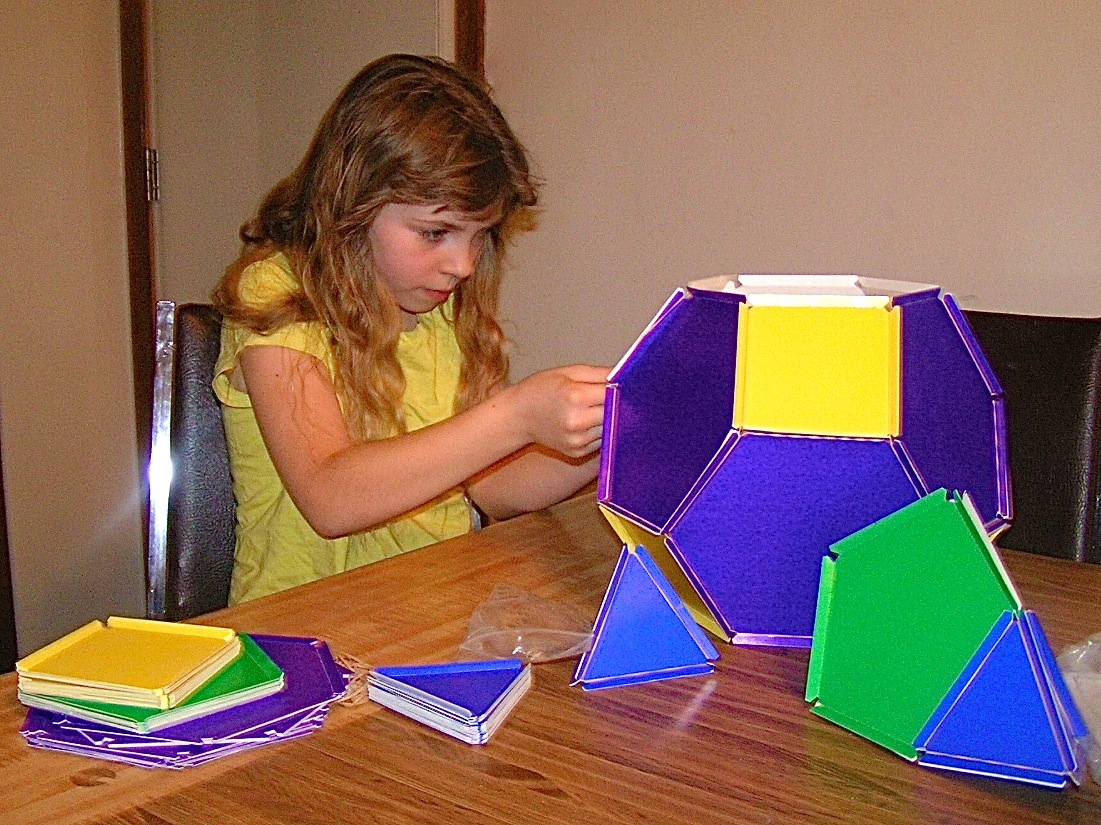
When you hear the word mathematics, what comes to mind? Addition problems? Multiplication facts? Long division? For many of us, mathematics has always meant working with numbers and finding the correct answers.
But mathematics is much bigger than that!
Arithmetic is just ONE branch of mathematics. Math also includes logic, geometry, algebra, statistics, probability, and much more. It helps us understand the world around us, solve problems, make decisions, and think logically.
At RightStart Mathematics, we believe children should learn to understand, apply, and enjoy mathematics. That means helping them see that math isn’t simply a collection of facts to memorize. It’s a way of thinking that can serve them throughout their lives.
How Many Branches of Mathematics Are There?
There isn’t one universally agreed-upon number of branches of mathematics, but here are eight major areas:
- Arithmetic: Working with numbers through addition, subtraction, multiplication, division, fractions, decimals, and percents.
- Algebra: Exploring relationships between quantities and solving equations.
- Geometry: Studying shapes, sizes, angles, and spatial relationships.
- Trigonometry: Investigating relationships between angles and sides of triangles. So cool!
- Statistics: Collecting, analyzing, and interpreting data. My favorite.
- Probability: Exploring the likelihood of events.
- Calculus: Studying change, motion, and accumulation.
- Number theory: Investigating the properties and relationships of numbers.
- Mathematical logic: Studies the formal structure of mathematical reasoning, proof, and language.
Arithmetic is important, but it is only one part of a much larger mathematical world!
You Can Struggle with Arithmetic and Still Be Good at Math
Have you ever heard someone say, “I’m just not a math person”?
Perhaps they struggle to remember multiplication facts or need extra time to calculate an answer. They may have concluded that they simply aren’t good at mathematics.
But is that fair?
Struggling with arithmetic does not automatically mean someone struggles with every area of mathematics.
A student might find arithmetic facts difficult to recall but excel at recognizing geometric patterns. Another might enjoy logic puzzles, understand spatial relationships, or be particularly good at analyzing data.
Arithmetic skills are important foundations for many advanced topics, but difficulty with one skill doesn’t define a person’s entire mathematical ability.
Sometimes children simply need a different approach to learning. At RightStart Math, we emphasize understanding, visualization, and strategies rather than relying solely on memorization. Children learn to recognize quantities, see relationships, and reason their way toward answers.
The goal isn’t simply to remember a fact but to understand how numbers work. When children discover that there is more than one way to approach a problem, mathematics can become less intimidating and more rewarding.
Math Is About Logic and Reasoning
One of the most important things mathematics teaches us is how to think logically.
Logic involves examining information, recognizing relationships, considering possibilities, and deciding whether a conclusion makes sense. These skills are useful far beyond a math lesson.
Think about everyday life. You might determine whether you have enough time to run errands before an appointment, compare products to find the best value, or decide whether a purchase fits your budget. Each situation requires reasoning, analyzing information, and making decisions.
Children develop these skills when we ask not only what the answer is, but also how they know and why their answer makes sense.
For example, instead of simply asking a child to calculate 7 + 6, invite them to find an easier way. They might recognize that 7 needs 3 to make 10. Taking 3 from the 6 leaves 3, so 10 + 3 = 13.
The child has done more than find an answer. They have recognized relationships and used logical reasoning.
These habits of mind can help children throughout their education and adult lives.
Math Teaches Processes, Not Just Answers
Mathematics teaches children how to approach a problem. They learn to identify what a problem is asking, determine which information matters, choose a strategy, and check whether their answer makes sense.
The answer is only part of the story. The thinking that leads to the answer is equally important.
Imagine a child who forgets a multiplication fact. If they have only memorized it, they may not know what to do next. But if they understand multiplication and have learned strategies, they can reason their way to the answer.
For instance, to solve 6 × 7, a child might think of it as 5 × 7 plus 1 × 7, or 35 + 7 = 42.
This flexible thinking is valuable throughout life. When one approach doesn’t work, we can try another. When a problem seems complicated, we can break it into smaller pieces. When we make a mistake, we can retrace our steps and discover where things went wrong.
These are not just mathematical skills. They are life skills.
Math Is Part of Life
We use mathematical thinking more often than we realize. We estimate travel time, compare grocery prices, adjust recipes, interpret weather forecasts, and plan budgets. We use spatial reasoning when arranging furniture and logic when weighing alternatives.
As children grow older, mathematics may become part of careers in engineering, healthcare, business, computer science, art, and design. Even when a job doesn’t require advanced calculations, analyzing information and solving problems can be valuable.
Helping children understand the broader role of mathematics gives them a reason to learn beyond passing a test. It helps them see that what they learn today can be useful tomorrow.
Let’s Help Children See the Bigger Math Picture
So, is math more than arithmetic? Absolutely!
When children struggle with arithmetic, we shouldn’t rush to label them as poor math students. Instead, we should help them understand numbers, develop effective strategies, and discover the many ways mathematical thinking can be used.
At RightStart Mathematics, our goal is to help children understand, apply, and enjoy mathematics through visualization, hands-on learning, strategies, and games.
Because mathematics isn’t simply about memorizing numbers and procedures.
It’s about learning how to think—and that’s a skill children can use for the rest of their lives.
Visit RightStartMath.com to discover an approach to math that emphasizes understanding and mathematical thinking.
- Filed Under: General Info, Struggling Learner
- Tagged With: branches of mathematics, building mathematical understanding, Is math more than arithmetic, math and logical thinking, math for everyday life, math problem-solving skills, math reasoning skills, Math Visualization, mathematics beyond arithmetic, RightStart Mathematics, teaching children to think mathematically, teaching math strategies