
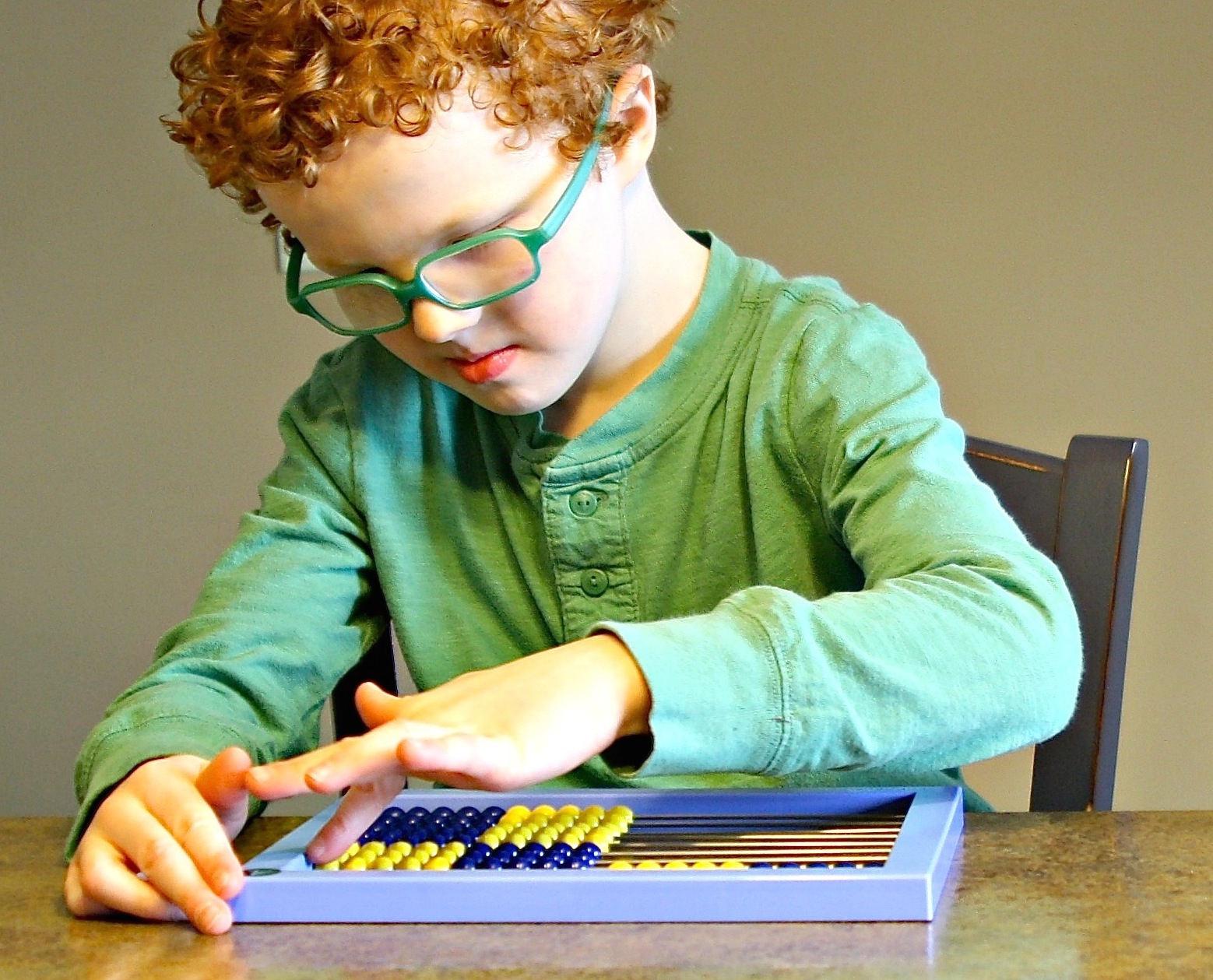
One of the joys of homeschooling is being able to slow down and ask an important question: Does my child really understand this, or have they simply learned how to get the answer?
That question is especially important when choosing math manipulatives.
Hands-on materials can make math more concrete and engaging. Children can move objects, build quantities, compare numbers, and discover relationships that might otherwise seem abstract or even unattainable. But all manipulatives are not designed to teach mathematics in the same way.
Colored rods and the Cotter Abacus are two examples. Both give children something physical to work with, but the mathematical thinking they encourage is quite different.
For homeschool families who want children to understand, apply, and enjoy mathematics, the design of the Cotter Abacus offers some significant advantages.
More Than Just a Representation of a Number
Colored rods represent numbers through their lengths. Each length is assigned a particular color. Children learn that a certain color represents 1, another represents 2, another represents 3, and so forth.
This gives children a concrete way to explore mathematical relationships. They can put rods together, compare their lengths, and discover that two quantities can combine to make another quantity.
But there is something to consider: the color-to-number connection is arbitrary.
The color doesn’t tell the child anything about the quantity. A child must learn that the particular color represents 4, 5, 6, or another number.
The Cotter Abacus approaches numbers differently.
This special abacus incorporates mathematical relationships through the visual aspects of the layout. The 100 beads are arranged in ten rows of ten, with each row visually divided into groups of five.
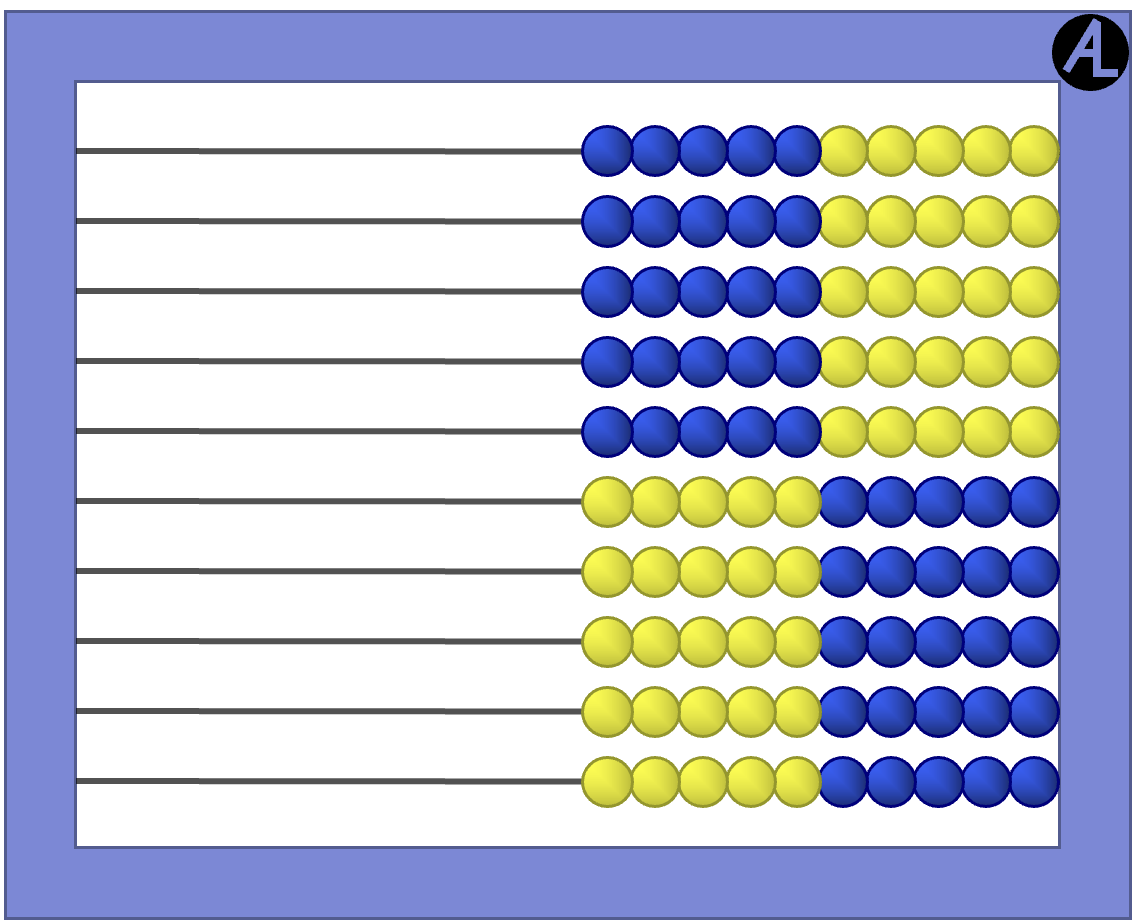
The child doesn’t have to learn that a particular color, means seven.

Instead, the child can see seven as five and two.
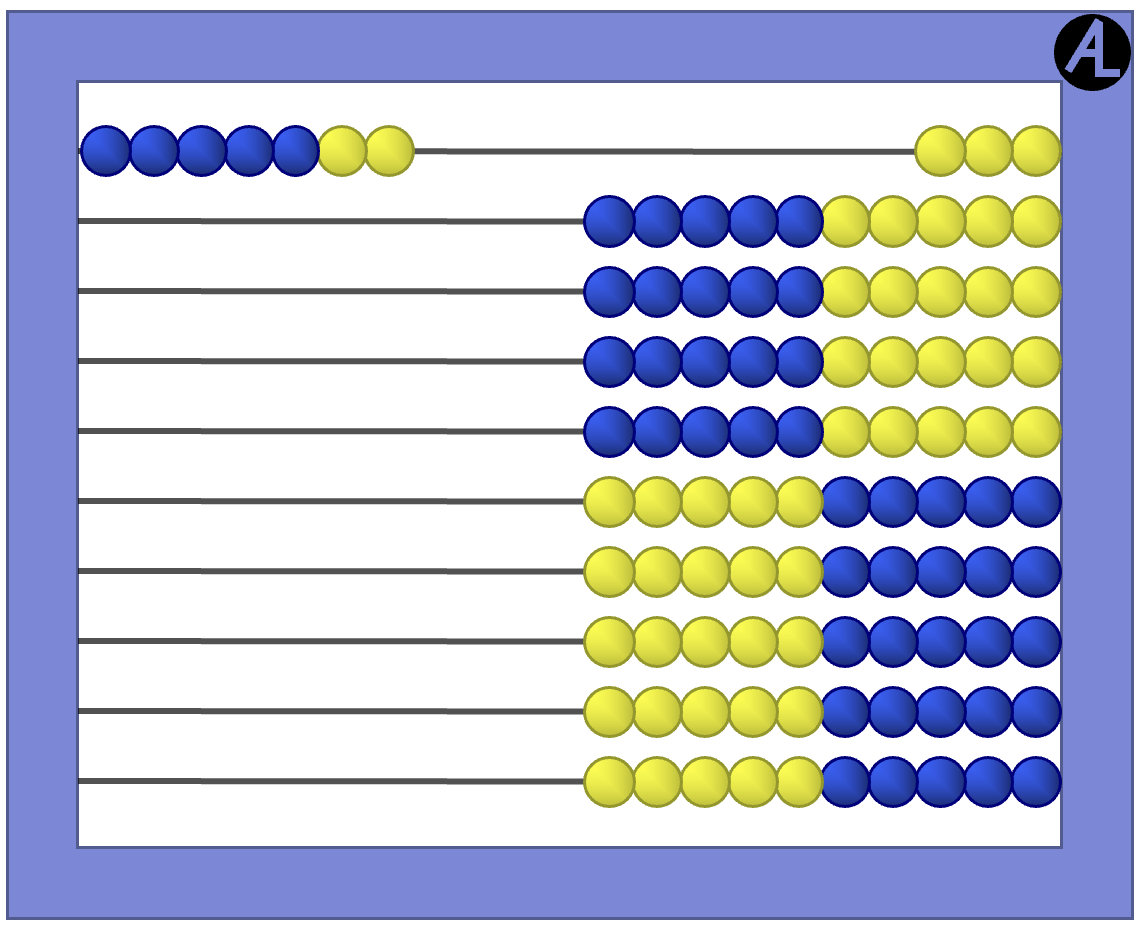
That is a fundamentally different kind of learning.
Seeing Numbers Through Fives and Tens
The Cotter Abacus was intentionally designed around the way we organize numbers in our base-ten system. It also aligns with the way the human brain processes quantities with grouping.
Five is a natural benchmark for recognizing quantities. It matches our hands. Ten is the foundation of our place-value system. By grouping beads in fives and tens, the abacus gives children a visual structure for understanding numbers.
This makes subitizing much more natural.
Subitizing is the ability to recognize how many objects are in a group without counting each one individually. Most children and adults can instantly recognize the quantity of five. We don’t need to say, “One, two, three, four, five.” We simply see five.

The Cotter Abacus extends that idea.
When a child sees eight beads, the visual grouping makes it easy to see five and three.
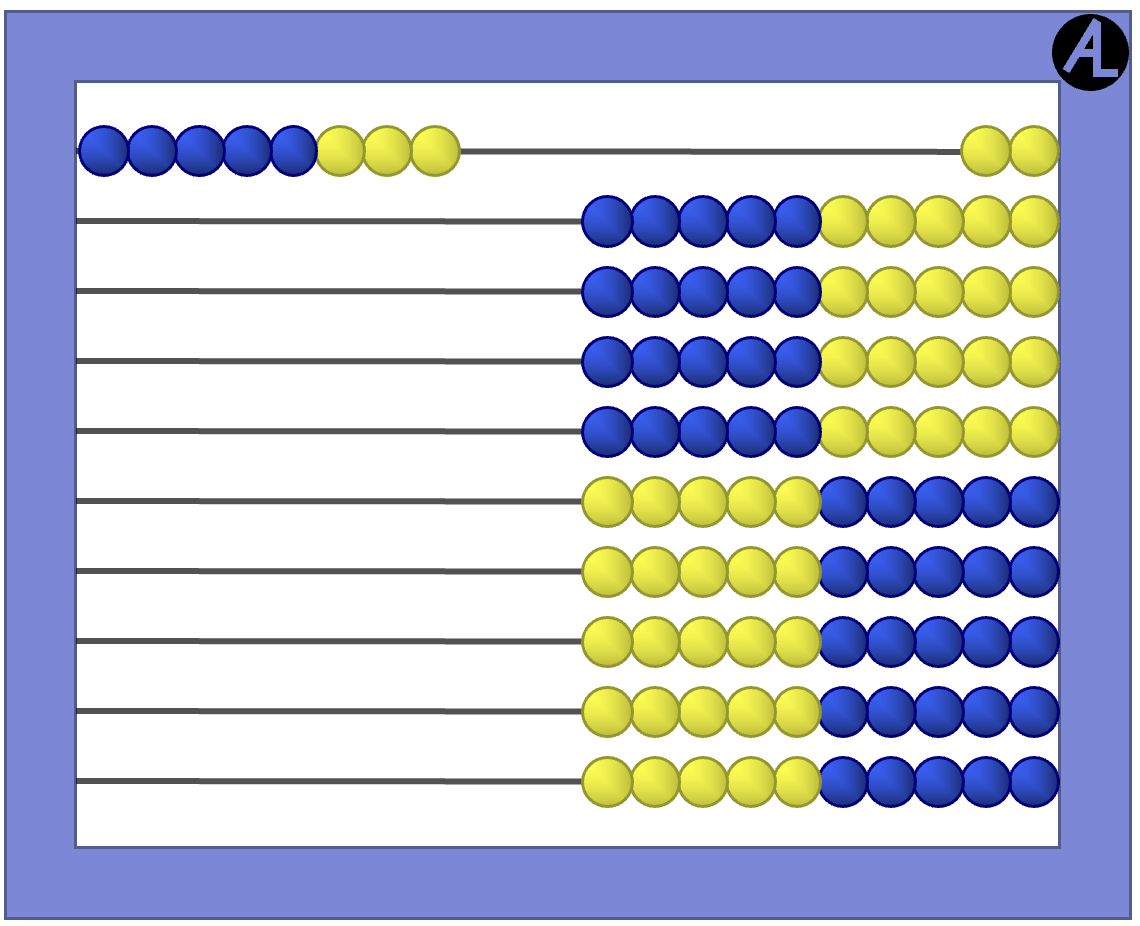
Nine becomes five and four. Six becomes five and one.
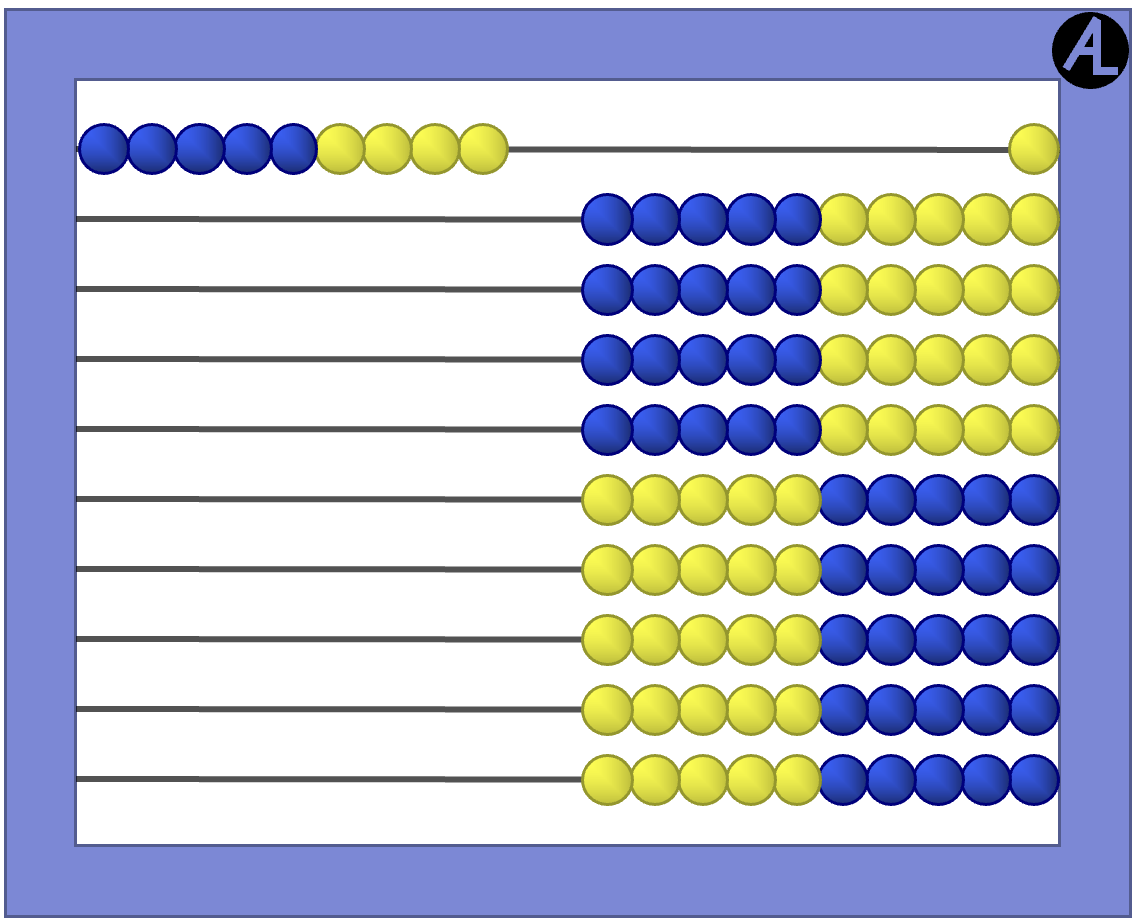
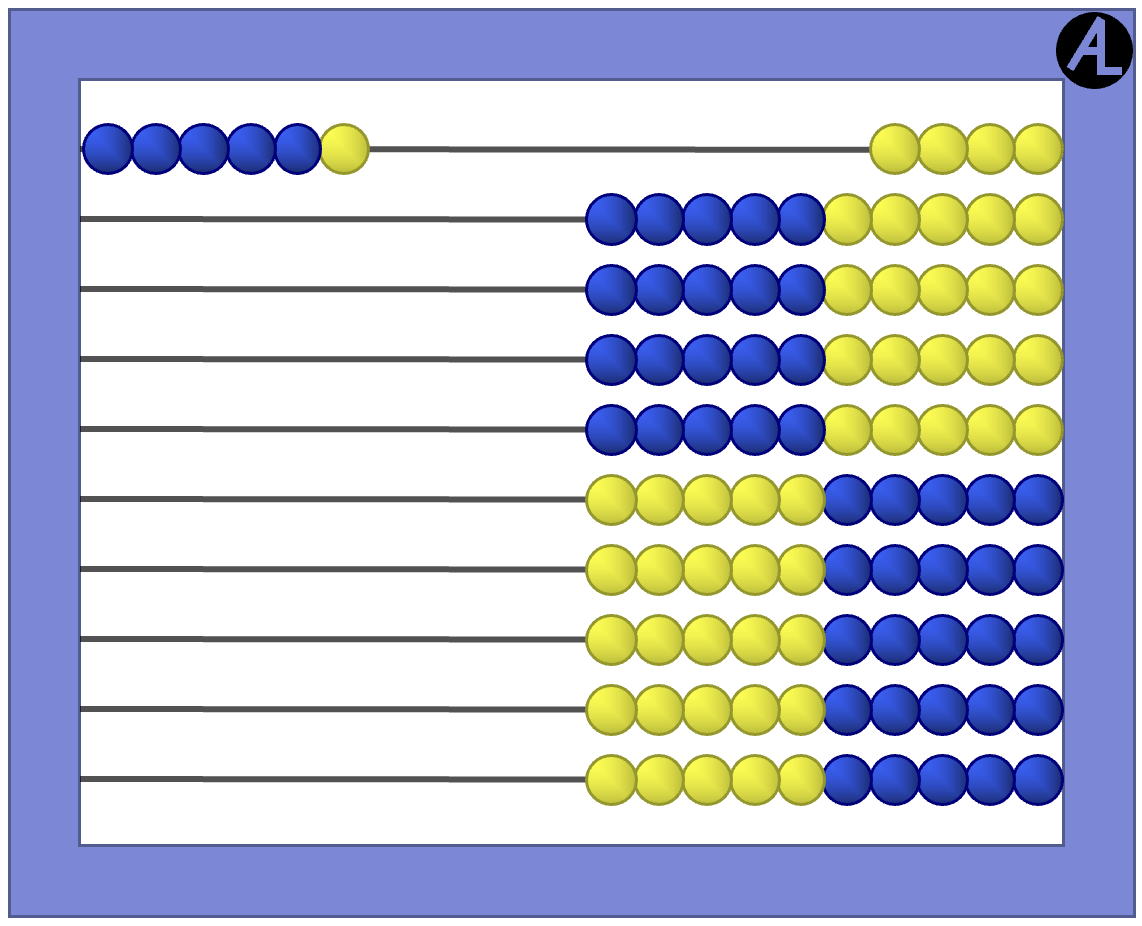
Instead of seeing a collection of individual beads, the child begins to see quantities and relationships.
This is one of the basic foundations of number sense.
From Counting to Thinking
Counting is not an efficient strategy for solving mathematical problems.
Consider a child solving 8 + 5.
If the child counts eight objects and then counts five more, they can arrive at the correct answer. But counting doesn’t reveal the relationship between the numbers. It’s just an exercise in reciting a sequence of words.
With the Cotter Abacus, the child can see 8 as 5 + 3. Add the two fives together to make ten, then there are three more.
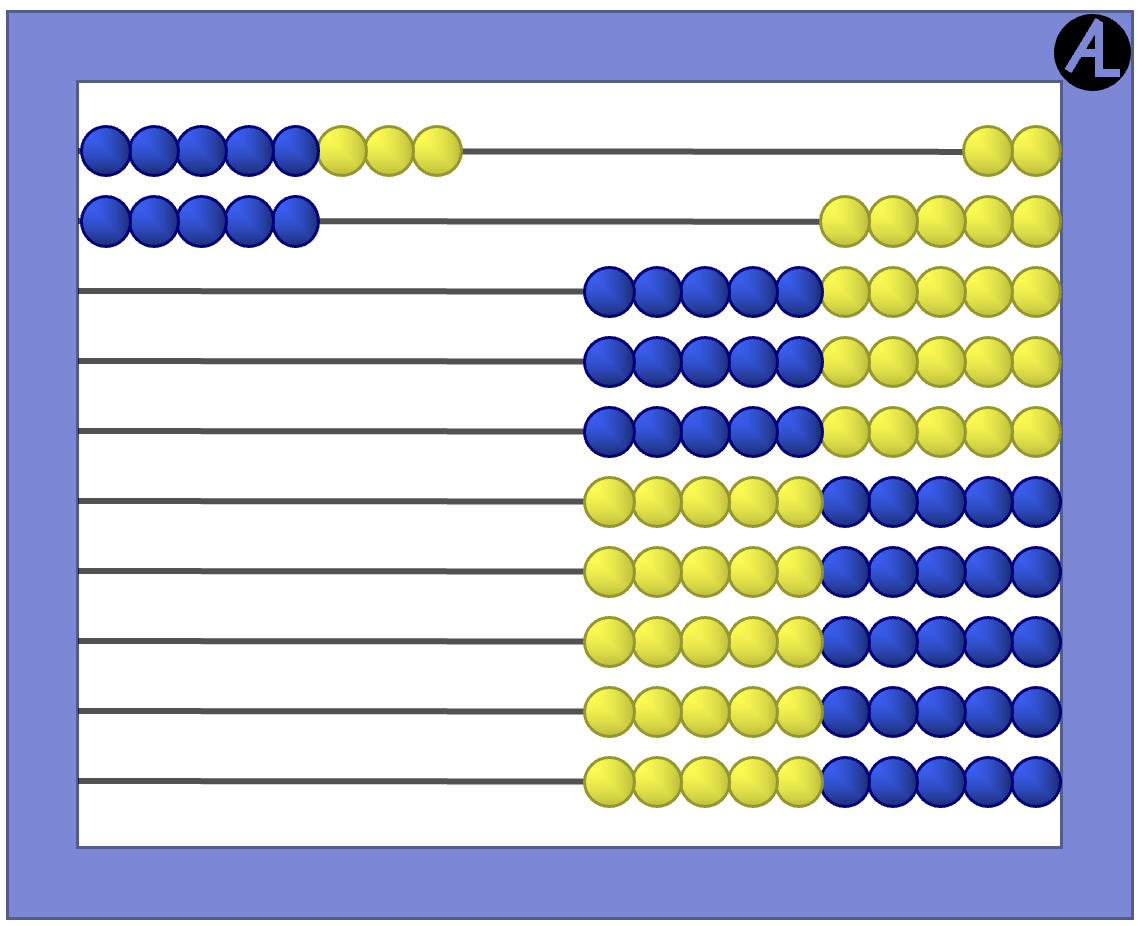
So, 8 + 5 = 10 + 3 = 13.
The child isn’t merely finding an answer. They are discovering and developing a strategy.
This is an important distinction in the RightStart approach. Rather than encouraging children to rely on counting or rote memorization, the goal is to help them develop efficient, visualizable strategies for working with numbers.
Strategies Make Math Facts Make Sense
Math facts don’t have to be isolated pieces of information that children memorize one at a time.
Take 7 + 6.
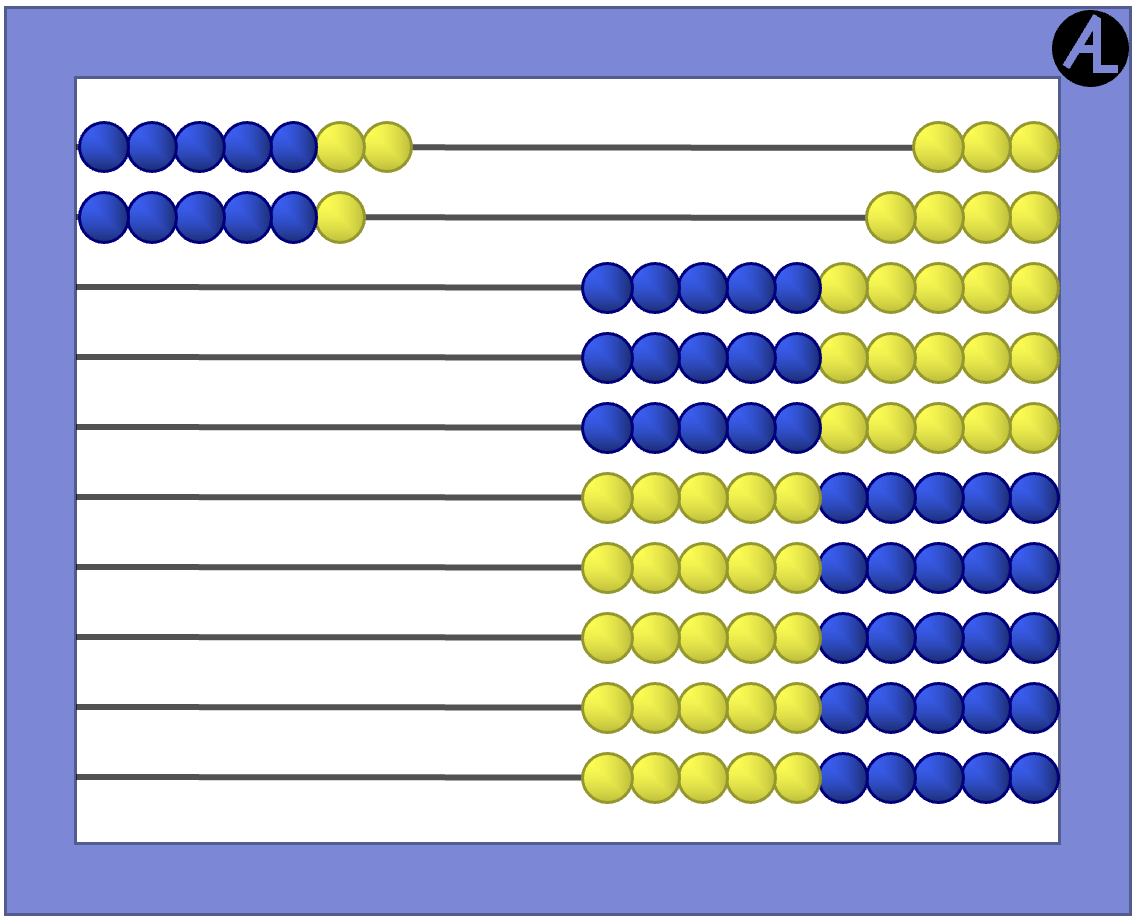
A child can see 7 as five and two and 6 as five and one. The two groups of five make ten, and the remaining three make 13.
Try this same math problem with colored rods. Lay out the 7-rod and the 6-rod. Can you see the answer?
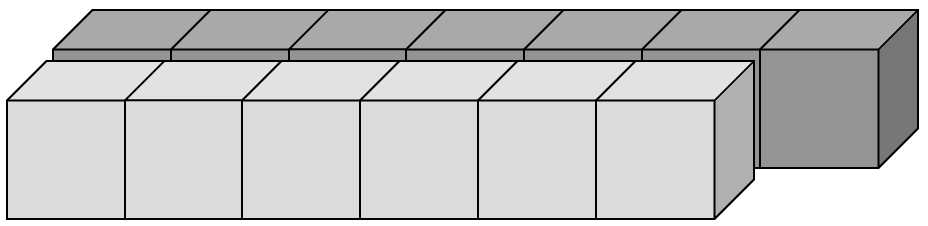
The answer is not obvious.
Lay the two rods end to end. Can you see the answer now?

The answer is still not obvious.
Find the 10-rod and fill in the missing rod. The sum is not evident unless counting or memorizing arbitrary color-to-number assignment has occurred.

Let’s consider another strategy with the abacus 9 + 6.
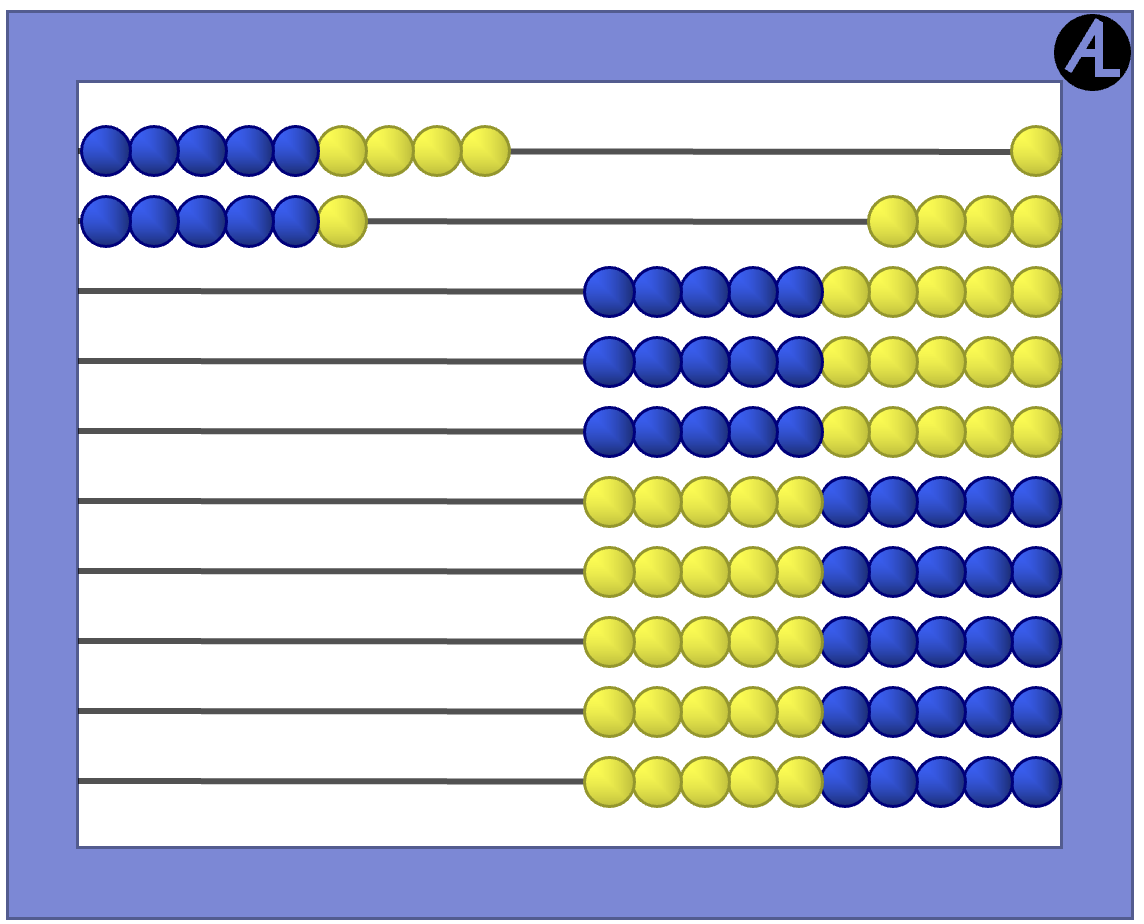
The child can recognize that 9 needs just one more to make 10. Take one from the 6 and give it to the 9.
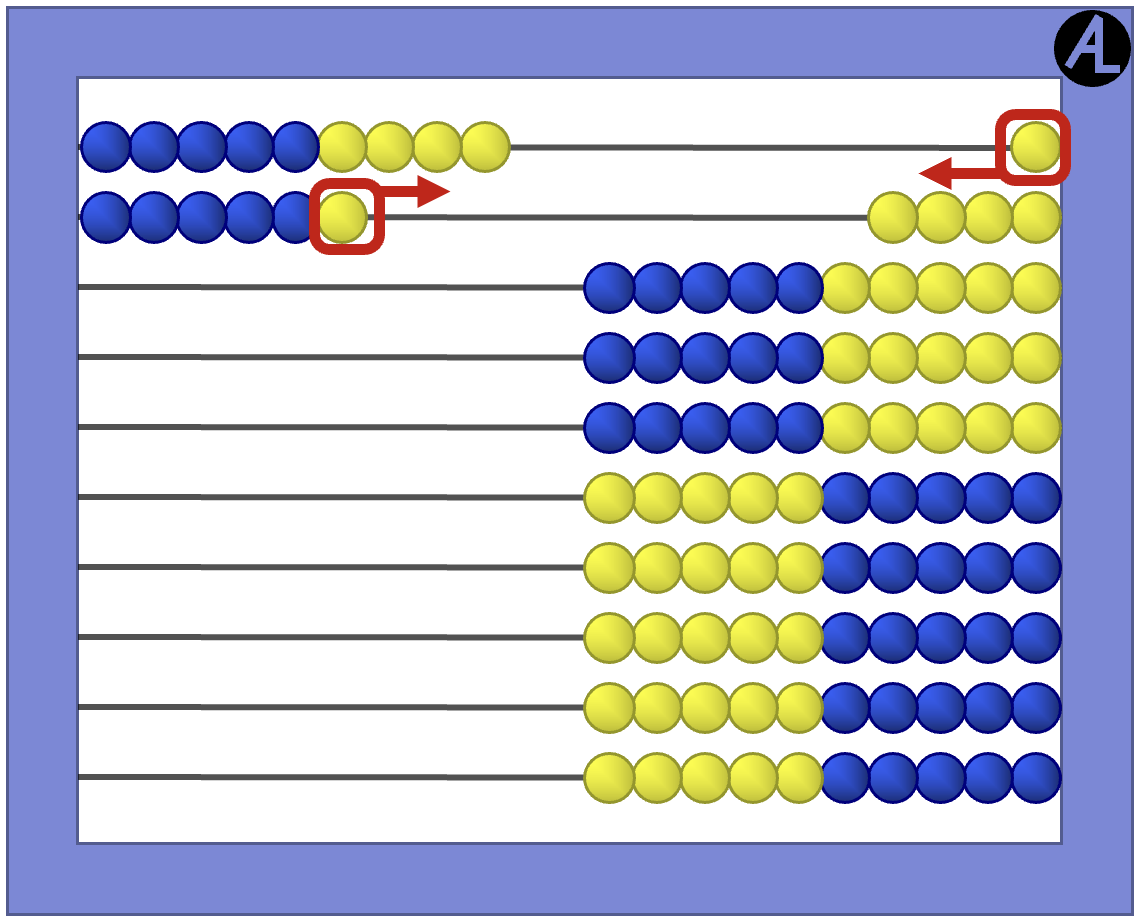
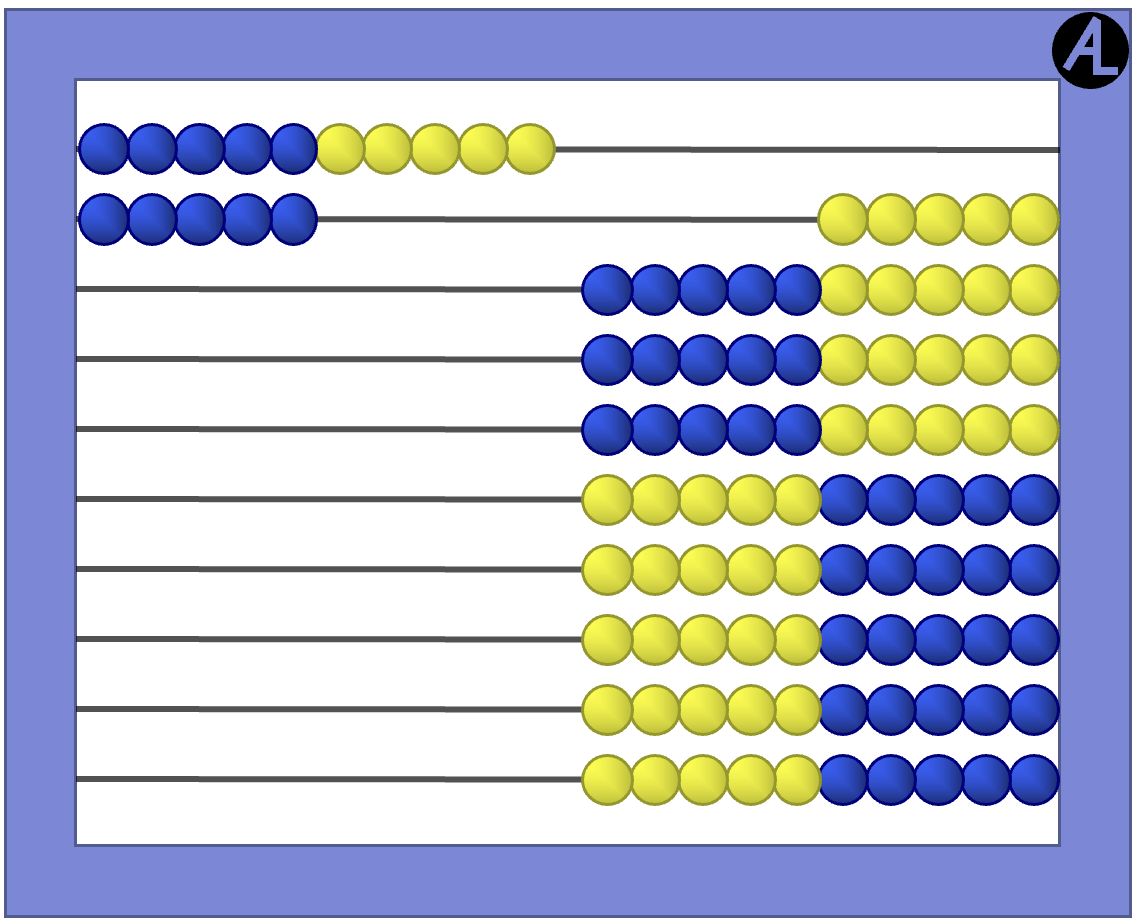
Now see the sum as 10 + 5 = 15.
These strategies are powerful because they are based on relationships children can understand.
The answer isn’t coming from random colors.
The child can see why the answer is 15.
And with repeated experiences, children can eventually visualize these relationships without the physical abacus.
That is the ultimate goal: not dependence on a manipulative, but the development of a mental model of mathematics.
Goals of Math
RightStart Mathematics is built around three important goals: helping children understand, apply, and enjoy mathematics.
The Cotter Abacus supports all three.
Understand: Children see quantities and the relationships within them rather than simply memorizing colors, symbols, and answers.
Apply: Children use what they see to develop strategies for addition, subtraction, multiplication, division, fractions, and other mathematical concepts.
Enjoy: Mathematics becomes something children can explore and figure out rather than a long list of facts and rules they are expected to memorize.
That last point matters.
When a child realizes, “I can figure this out!”, math becomes empowering.
Choosing a Manipulative for Your Children
Questions to ask:
What is my child learning to see?
Is the child learning an arbitrary association between a color and a number?
Or is the child learning to recognize quantities, see relationships, and use strategies?
Is the manipulative teaching the child to count objects?
Or is it helping the child see the relationships and support understanding?
Is the child memorizing answers?
Or is the child learning how to figure out answers?
The Cotter Abacus was designed to make the structure of numbers visible. Its groups of five and ten make subitizing natural, support visualization, and provide a foundation for strategies that children will learn to use mentally.
The abacus is much more than something a child holds in their hands during a math lesson.
It becomes something they see in their mind.
And when children can see the math, they are better prepared to understand it, apply it, and—perhaps most importantly—enjoy it.
Because the goal of math education isn’t simply to produce children who know their facts.
The goal of math education is to develop people who understand numbers, recognize relationships, know how to find answers, and feel confident in their future.