
For generations, children have often learned mathematics in much the same way: learn the numbers, memorize the facts, follow the steps, complete the worksheet, and repeat. Because this is familiar, it can be easy to assume that it must be the best way to teach math.
But familiarity and effectiveness are not the same thing.
In Start Math Right: The Journey to Mathematics Excellence, Dr. Joan A. Cotter challenges us to look carefully at how mathematics has traditionally been taught—and to ask a more important question: How should children learn to think mathematically? The book emphasizes teaching children how to think, rather than simply what to think.
That distinction is at the heart of the difference between traditional math and RightStart Math.
When Traditional Math Creates Math Anxiety
Many adults can remember what traditional math felt like: memorize the facts, show your work, finish the worksheet, and be ready for the test. For some children, this process creates confidence. For all the rest of us, it creates anxiety.
Timed tests, flash cards, pressure to remember facts quickly, and the fear of making a mistake can turn mathematics into a performance rather than an opportunity to think. RightStart Math recognizes that anxiety can interfere with learning and instead strives to create a positive environment where children understand what they are doing and why they are doing it.
The goal isn’t simply to get the right answer. The goal is to understand mathematics well enough to know how to get the answer.
Are We Teaching Math the Way Mathematicians Think?
Here’s an important question: Do people who are genuinely good at mathematics solve problems by counting everything, memorizing hundreds of unrelated facts, and following a prescribed procedure every time?
Absolutely not.
Strong mathematical thinkers look for patterns. They recognize relationships. They break numbers apart and put them back together. They visualize quantities. They use strategies. They estimate, reason, and make connections.
So why not teach our children to approach mathematics in the same way?
RightStart Math was designed around this idea. Rather than asking children to memorize mathematics first and understand it later, RightStart Math develops number sense, visualization, and strategies from the beginning. As Dr. Cotter explains in Start Math Right, mathematics education should focus on understanding rather than simply memorizing words and symbols.
If we want children to become mathematical thinkers, shouldn’t we teach them to think like mathematicians?
“The Way We’ve Always Done It” Isn’t Always the Best Way
Traditional approaches often continue because they are familiar. Parents learned math that way. Teachers learned math that way. Textbooks have been written that way for decades.
But mathematics education doesn’t have to stand still.
We know more today about how children learn than we did when many traditional methods became commonplace. Research into learning, visualization, number sense, and the brain has given educators new reasons to examine old assumptions.
Start Math Right directly questions the long-held assumption that counting must be the foundation of arithmetic. Dr. Cotter points out that counting is so deeply embedded in our culture that we rarely stop to ask whether it is actually the best starting point for learning mathematics.
RightStart Math takes that question seriously.
Counting vs. Subitizing
Traditional math often teaches children to count quantities one at a time: one, two, three, four, five… Making counting the primary strategy for everything can become a problem. Even if it’s used for addition and subtraction, it becomes burdensome with multiplication and division, then relatively useless with fractions, decimals, percents, and algebra.
RightStart Math instead emphasizes subitizing—recognizing a quantity without counting.
Consider seven items arranged randomly. Many children need to count them one at a time.

But arrange the seven in a familiar pattern, and the quantity can be recognized immediately.


RightStart builds on this natural ability by grouping quantities in fives and tens. The Cotter Abacus makes those groupings visible, helping children see quantities rather than count individual beads.
This becomes especially powerful as children learn addition and multiplication. Instead of thinking, “I have to count to find the answer,” they begin thinking, “I can see how these numbers relate.”
Worksheets vs. Games
Traditional math can be heavily worksheet-based. Worksheets have a place in education, but when they become the primary way children learn and practice mathematics, something important can be lost.
Children need to DO mathematics, not simply record mathematics.
RightStart Math incorporates games, hands-on activities, conversation, and visual models throughout the lessons. Its math card games provide repetition without making repetition feel like drudgery. The games are designed to teach mathematical ideas while children are playing—and children don’t have to memorize all their facts before they can participate.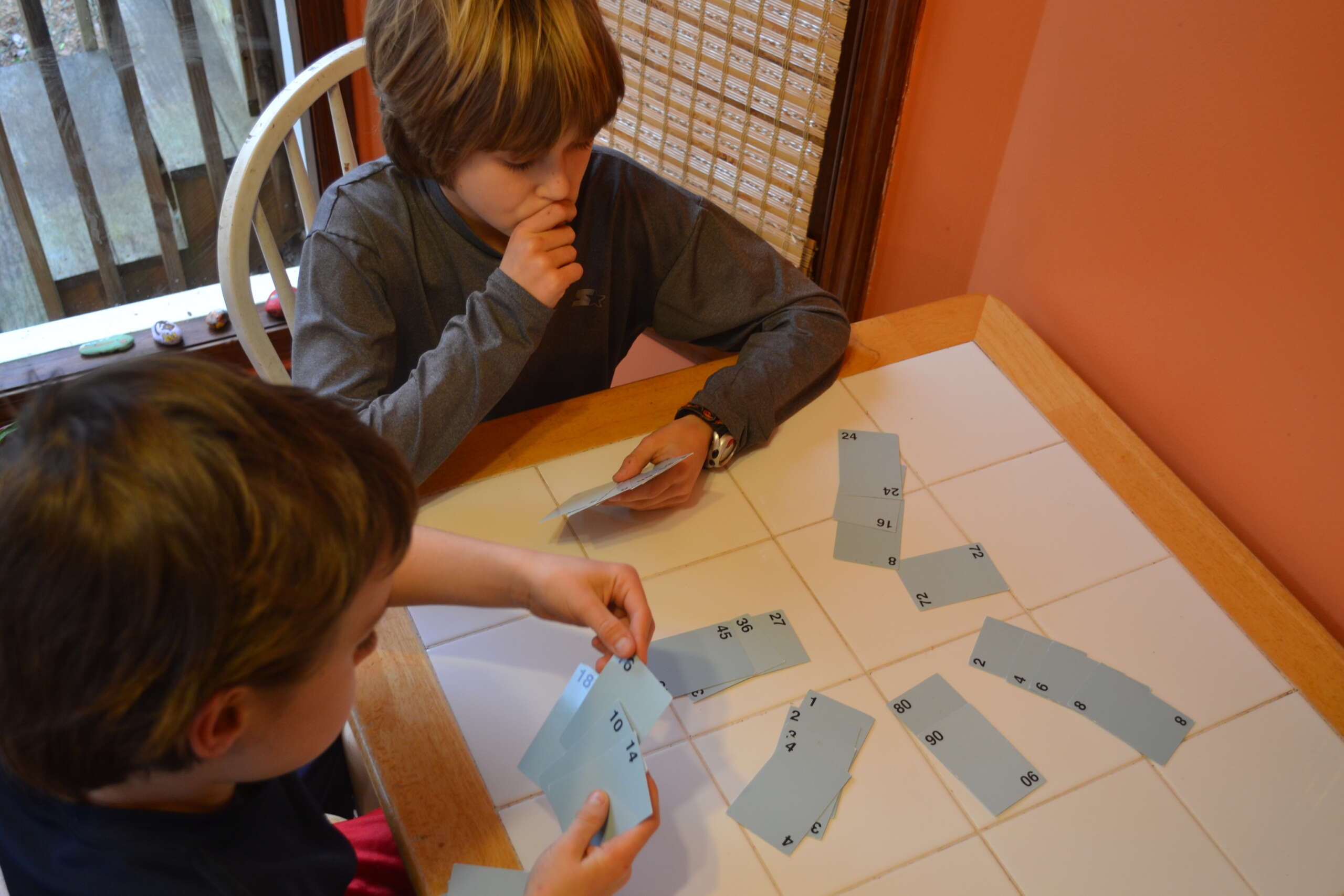
This changes the experience of practice. Instead of, “You have to do 30 more problems,” it can become, “Let’s play a game.”
Memorization vs. Strategies and Visualization
Some memorization will be needed – 95% of math should be understood and 5% should be memorized. Some mathematical facts eventually need to become automatic. The question is how children get there.
Traditional approaches may ask children to memorize facts before they understand the relationships within those facts. This can be particularly challenging for children with learning differences who struggle with rote memorization.
RightStart takes another path.
Children learn strategies that help them derive facts. They use the physical materials to develop visual images that allow them to solve problems without the physical materials.
For example, rather than simply memorizing 7 + 6 = 13, a child can see 7 and 6 in groups of five with the blue beads, recognize a ten and three more with the yellow beads, and understand why the answer is 13.
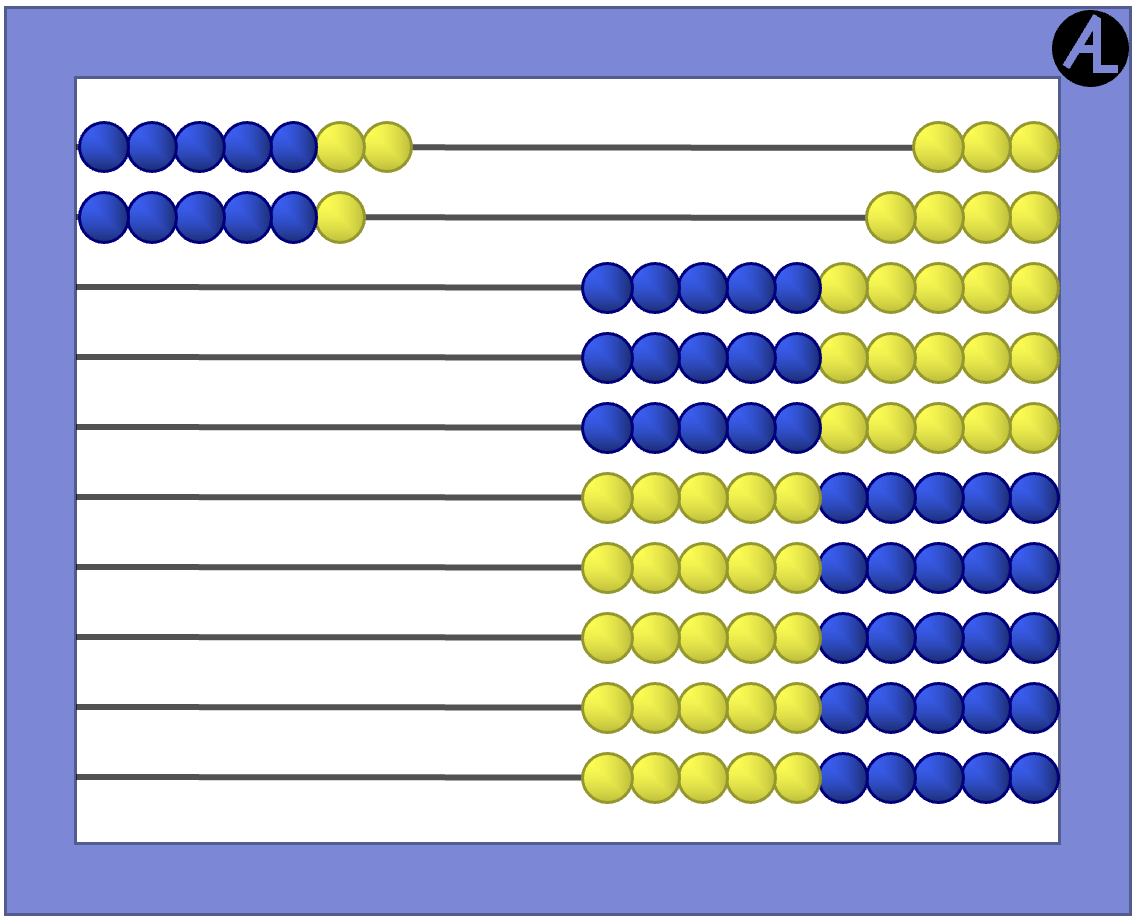 With practice, that visual strategy becomes something the child can picture mentally.
That is very different from memorizing an isolated answer with a 7, a 6, a 1, and a 3.
Abstract First vs. Concrete to Abstract
Another major difference is how mathematics is represented.
Traditional instruction can move children quickly into numerals, symbols, and written procedures. RightStart begins with concrete and visual experiences and gradually moves children toward abstract mathematics.
The Cotter Abacus is central to this approach.
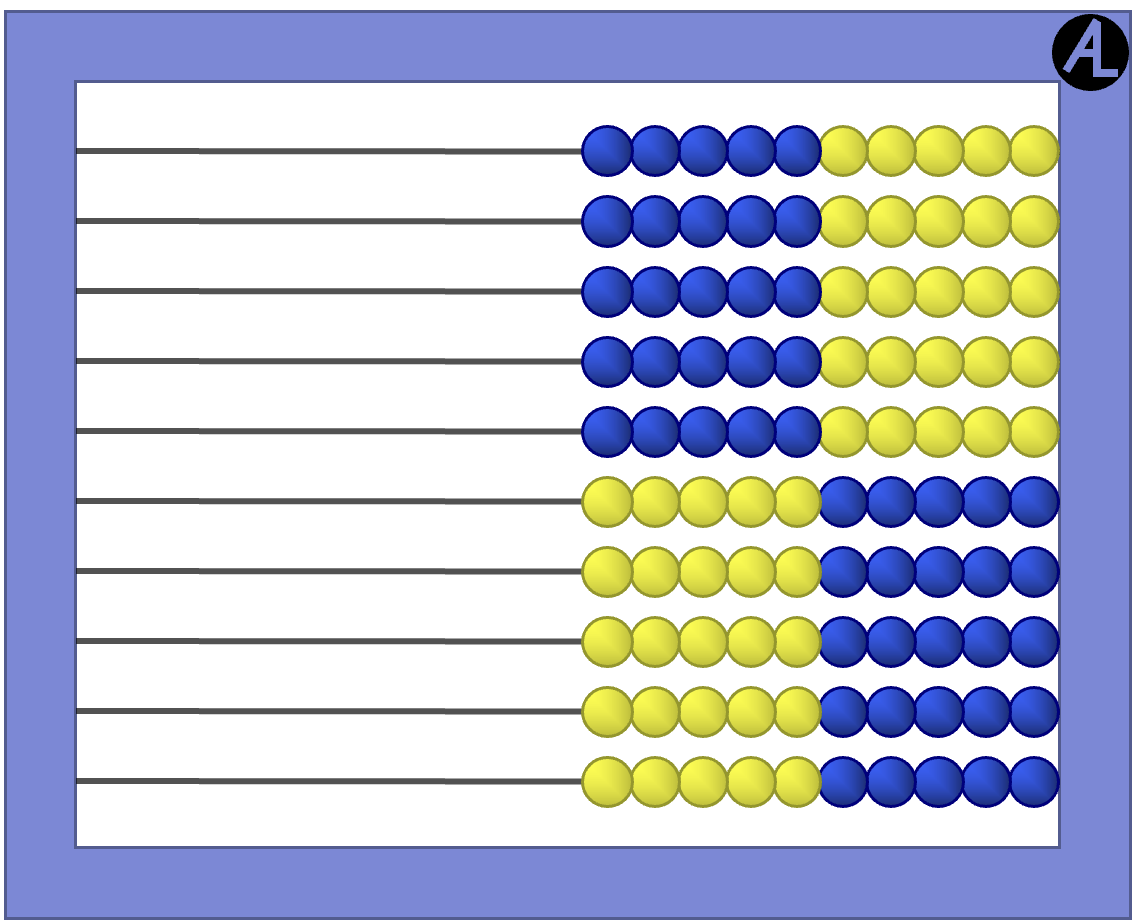 The Cotter Abacus isn’t simply something children use because they “need manipulatives.” It is designed to help children build a mental model of numbers. As children work with quantities grouped in fives and tens, those physical images become mental images.
The goal isn’t to use manipulatives forever.
The goal is to use them well enough that children eventually don’t need them.
A Different Starting Point—and a Better Destination
Traditional math asks children to learn mathematics in a familiar way. RightStart Math asks us to rethink that familiarity.
Instead of counting, see quantities.
Instead of memorizing isolated facts, use strategies.
Instead of relying primarily on worksheets, play games and explore.
Instead of moving immediately to abstract symbols, begin with concrete experiences and visual models.
Instead of asking children to simply produce answers, teach them to think mathematically.
That is the vision behind RightStart Math and Dr. Joan Cotter’s approach: mathematics should not be something children merely endure until they can pass the test. It should be something they understand, apply, and enjoy.
And perhaps the most important difference is this: RightStart Math doesn’t simply ask, “How can we get children to remember math?”
It asks a much better question: How can we help children learn to think like mathematicians?
That is a question worth asking—and a much better way to start math right.