
I am a quilt designer. I’ve made over 250 quilts in my lifetime, 98% of my own design. I’m currently working on my sixth quilt from someone else’s pattern.
I have the directions in front of me as I’m approaching on the final steps of Bonnie Hunter’s Allietare quilt design.
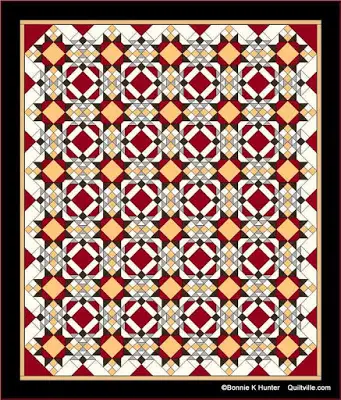
I find myself struggling to understand how all the pieces go together. I can briefly see it, then it vanishes. I look again and understanding shimmers, then vanishes again.
I read the instruction once more, but how it all works together still eludes me.
In order to understand, I draw.
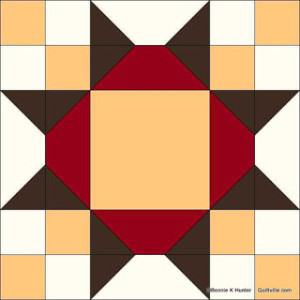
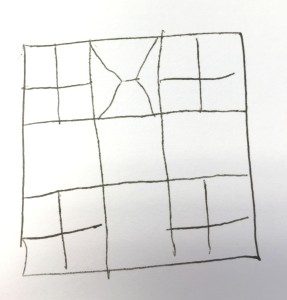
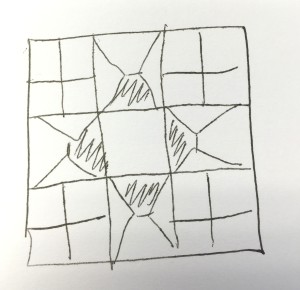
I draw out what I have right in front of me.
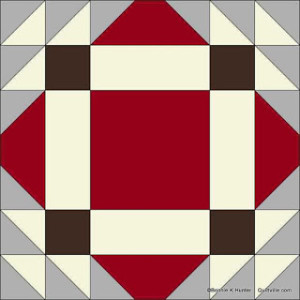
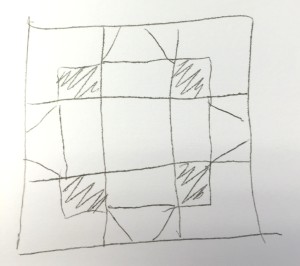
This drawing, this reassembling of the pieces, allows me to understand. Now I can see how the pieces go together. Now I can proceed!
Why do I share this with you? As I was struggling with the design, I thought of children struggling to grasp math.
If a child only has a printed page in front of them with the directions, that does not ensure understanding. I don’t care how great the instructions are or how colorful they are, it’s just not going to happen.
They need to touch their math. Play with it. Explore it. Manipulate it.
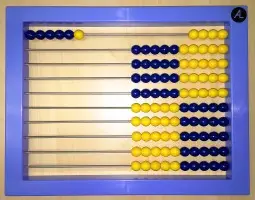
Which is exactly what the Cotter Abacus does.
If you show a child 3 + 3 = 6, these are abstract symbols representing specific quantities.
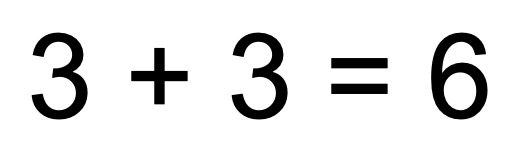
This configuration can be memorized. But this memorization is not the same as understanding.
But if we allow a child to SEE the actual quantity of 3, and 3 more,
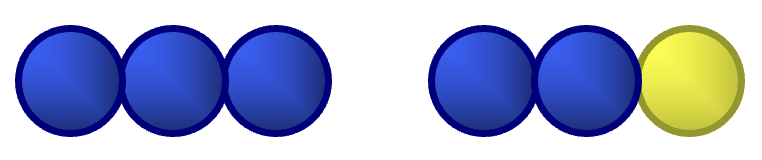
then COMBINE of the quantities, now we have the quantity of 6.
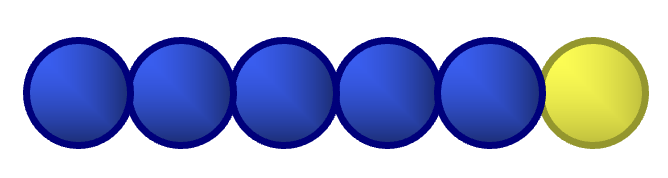
It becomes real. Easier to understand. Easier to remember.
That, my friends, is the power of a good manipulative. The Cotter Abacus is a visual and tactile tool that helps children develop mental images of quantities, strategies, and mathematical operations.
Stan, age 5, was asked what 11 plus 6 is. With confidence, he said 17. When asked how he knew the answer, he responded, “I have the abacus in my mind.”

I’m embarrassed to admit how long it took me to recognize the absolute BEAUTY of the abacus. I have understood the importance of physical items for quite some time (since college) (and we are not talking about how long ago that was!) Students need to touch and feel their math, particularly when they are learning new concepts, and particularly when learning challenges are complicating things for them. But I always thought I would use teddy bear counters, or beans, or something. Guess what? They go EVERYWHERE!!!
The abacus is amazing because not only does it allow for subitizing all the way up to 100 (and beyond, on the back), which is the first and most obvious advantage. But as I have taught more and more from it, I am realizing that the very BEST thing is that there are 100 little counters on it, and they can not roll off of the table, or get lost!! Brilliant!! This is particularly important with my students with ADHD, an item ending up on the floor can completely derail their thought process. Beads, contained on an abacus, in an organized, easily subatized manner… it just does not get any better than that!!